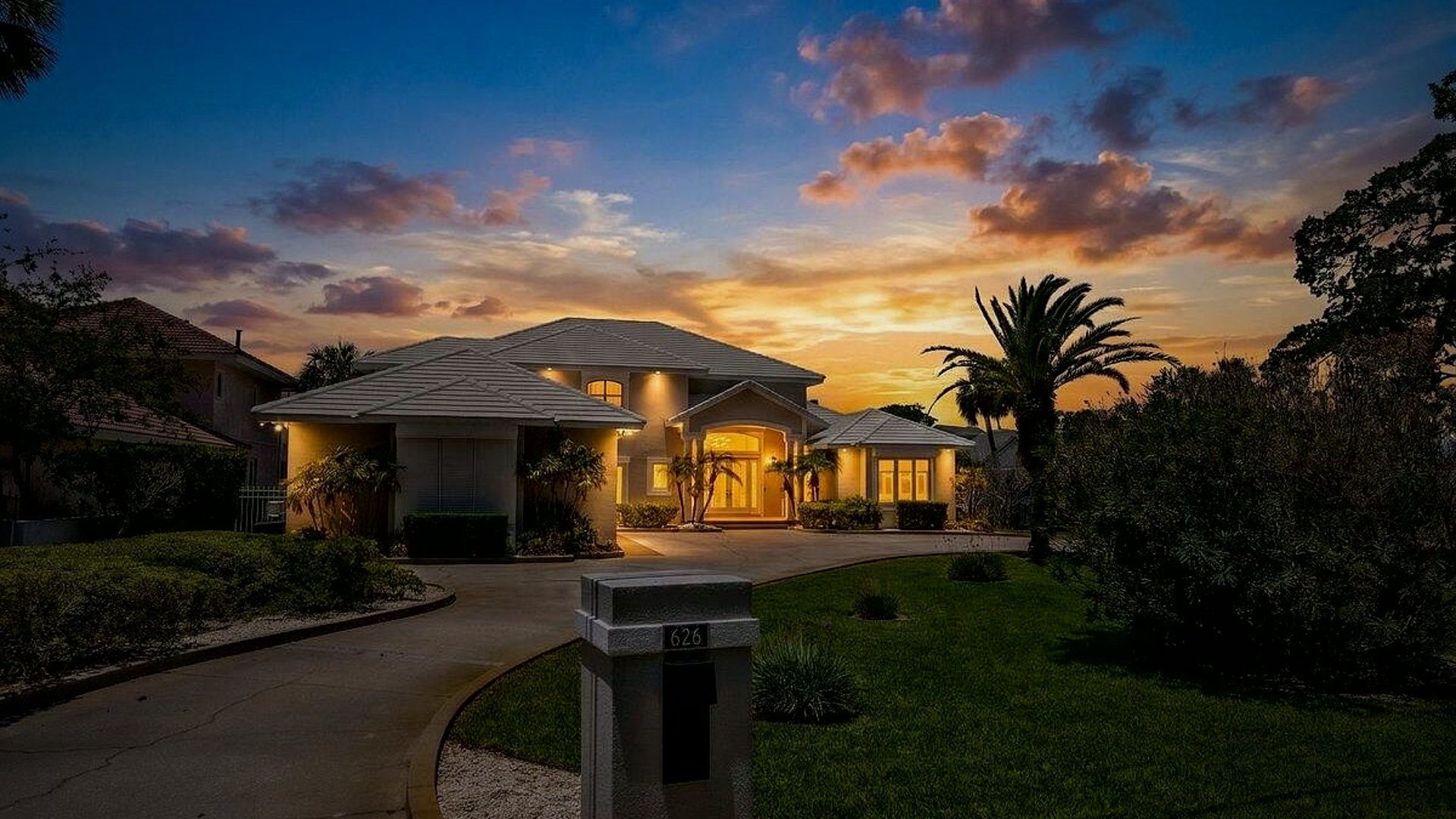
Why Volusia and Flagler Counties Deserve a Serious Look From Real Estate Investors Right Now
If you're hunting for income-producing property in Florida without competing in the overcrowded Miami or Orlando corridors, the Volusia-Flagler market in mid-2026 offers something increasingly rare: negotiating room, genuine cash flow potential, and long-term appreciation fundamentals still intact. As both a licensed Florida attorney and a Certified International Property Specialist (CIPS) REALTOR®, I spend a significant portion of my practice helping investors structure acquisitions that hold up legally, financially, and strategically. Here is what the data — and the deals — are telling me right now.
Market Conditions: A Buyer's and Investor's Window
Volusia County's typical home value sits at approximately $337,725, with modest year-over-year appreciation of roughly 2.2%. Critically, active inventory stands at over 4,100 homes, the median sale-to-list ratio is 94.62%, and nearly 48% of listings have experienced price reductions. Homes are averaging 73 days on market. For investors, that data translates directly into negotiating leverage — sellers are motivated, and there is room between list price and close.
Flagler County tells a similar story with an important twist. The countywide median hovers near $359,530, inventory is up approximately 22% year-over-year, and average listing age has stretched to 94 days in some months. That's the environment in which patient, well-capitalized investors thrive. However, the Flagler Beach submarket bucks the trend entirely — median prices there have climbed 8.5% to roughly $556,125, with listing times cut nearly in half. Coastal premium properties in Flagler Beach are moving fast and appreciating. Investors who can identify the right product type in the right submarket are positioned well on both fronts.
Entry-Level Cash Flow: Daytona Beach and Edgewater
Daytona Beach remains one of the most accessible entry points in Florida, with a median home price near $243,000 — well below Miami, Tampa, and Jacksonville. For investors targeting single-family rentals or small multifamily properties, that price point means your required gross rent for positive cash flow is achievable in today's rental market. Edgewater, at approximately $315,000, offers a similar value proposition with a stable year-round residential tenant base rather than heavy tourism seasonality.
Port Orange and Ormond Beach occupy the mid-tier — typically ranging from the low $300s into the $400s depending on condition and proximity to the coast. These markets attract longer-term, higher-income tenants, which supports rent stability and lower turnover costs. DeLand, often overlooked by out-of-state investors, continues to perform quietly well: a college town with Stetson University, strong downtown revitalization, and inland pricing that supports favorable cap rate calculations.
Understanding Cap Rates and Cash-on-Cash Returns in This Market
Sophisticated investors don't buy based on appreciation hope alone — they underwrite to cash flow first. In Volusia and Flagler Counties, well-selected single-family rentals in the $250,000–$375,000 range are generally producing gross rents in the $1,800–$2,600/month range depending on location and condition. After accounting for property taxes (Florida's non-homestead millage rates apply to investment property — no Save Our Homes cap protection under §193.155, Fla. Stat.), insurance, management fees, and maintenance reserves, net cap rates in this market are landing in the 5.5%–7.5% range for well-located assets — competitive by Florida standards.
One planning note: Florida's property tax assessment on investment property will reflect market value annually without the 3% Save Our Homes limitation that primary homeowners enjoy. Budget accordingly, and factor in a TRIM notice review period each September as part of your acquisition-year planning.
1031 Exchange Opportunities: Reinvest Smartly, Defer Strategically
For investors selling appreciated assets elsewhere in Florida or nationally, the Volusia-Flagler market offers compelling replacement property inventory under a §1031 like-kind exchange (IRC §1031). The combination of elevated inventory, motivated sellers, and a 45-day identification window means this market is particularly well-suited for exchangors who need to move quickly without overpaying. I regularly work with investors navigating exchange timelines, and the current local inventory depth — over 4,100 active listings in Volusia alone — provides meaningful flexibility to identify and close qualifying replacement properties within IRS deadlines.
Want answers for your exact situation? Get 30 minutes with an Attorney & REALTOR®. It's free.
Book a Free Strategy Call or call/text 386-273-3636Foreign Investors: FIRPTA Compliance Is Non-Negotiable
For international buyers — and this market attracts significant Canadian, European, and Latin American investor interest given its coastal profile — the Foreign Investment in Real Property Tax Act (FIRPTA, 26 U.S.C. §1445) requires buyers to withhold 15% of the gross sales price at closing when a foreign seller disposes of U.S. real property. This is a compliance obligation on the buyer, not optional. Proper structuring through a U.S. entity, advance planning on withholding certificates, and coordination between your real estate counsel and tax advisor are essential steps. As a Florida attorney, I handle this layer of the transaction directly — not as a referral to someone else.
Emerging Submarkets Worth Watching: Palm Coast and New Smyrna Beach
Palm Coast, Flagler County's largest city, offers newer construction inventory at price points that make sense for buy-and-hold strategies, particularly given infrastructure investment and continued population inflow along the I-95 corridor. New Smyrna Beach (NSB) occupies a premium coastal niche — consistently one of the most desirable addresses in the region — where short-term rental demand from the surf and arts tourism crowd supports stronger gross revenue for STR-permitted properties. Investors considering short-term rentals in any Volusia or Flagler municipality should verify local STR ordinances carefully, as regulations vary significantly by city and HOA.
What Smart Investors Do Differently
- Underwrite to actual non-homestead tax assessments, not the seller's current bill
- Verify STR permissibility at the city and county level before closing
- Structure entity ownership (LLC, etc.) for liability insulation and estate planning efficiency
- Plan 1031 timelines before listing the relinquished property, not after
- Use an attorney-REALTOR® who can handle both the contract and the legal structure in one engagement
Work With an Attorney Who Is Also Your Broker
The Volusia-Flagler investment market rewards preparation, local knowledge, and legal precision. Whether you're acquiring your first rental in Daytona Beach, executing a multi-property 1031 exchange into Palm Coast, or structuring a foreign national purchase in Flagler Beach, the details matter and the margin for error is narrow.
At Realty Pros Assured, I represent investors as both their licensed Florida REALTOR® and as an attorney through Truestead Law, LLC — a dual capacity that allows me to address contract mechanics, entity structuring, FIRPTA compliance, and 1031 strategy under one roof. That integration is not common. It is, I believe, what serious investors deserve.
Ready to evaluate investment opportunities in Volusia or Flagler County? Visit arthursimpson.com to schedule a consultation or search current listings. Let's run the numbers on a deal that actually makes sense for your portfolio.