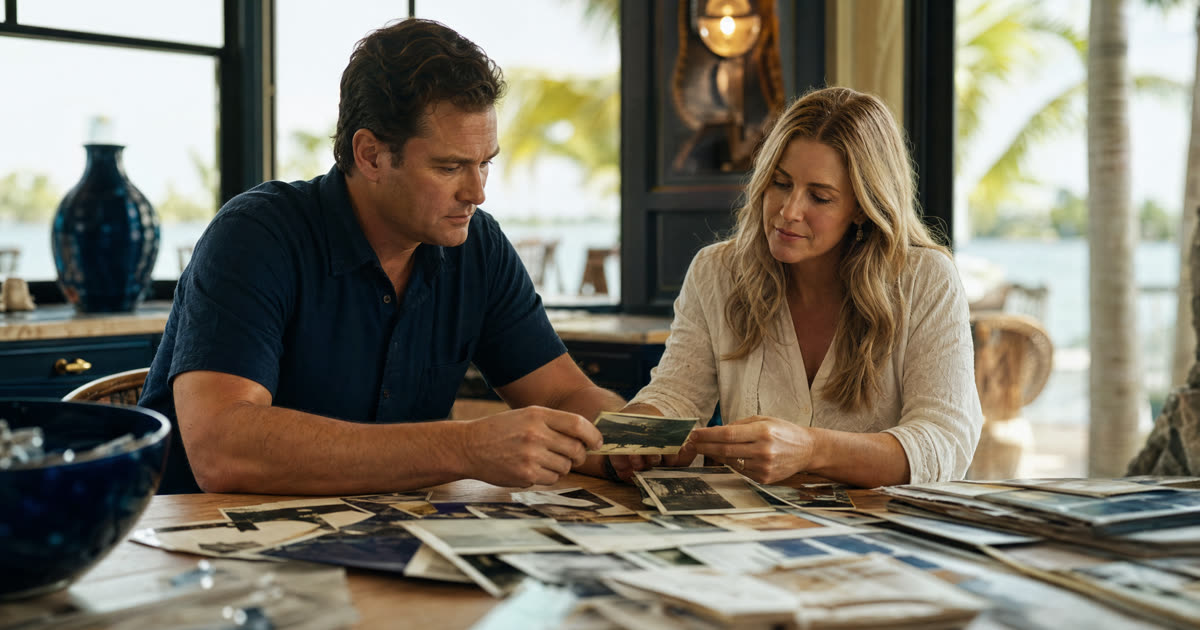
When Dad Remarried and the House Stayed in His Name
Robert Coleman owned a home in Ormond Beach long before he met Gloria. When he died, the house was still titled in his name alone, and Gloria was still living there. His three adult children from his first marriage assumed they would inherit the property and, eventually, sell it. Gloria assumed the house was hers to stay in as long as she wanted. Both assumptions were partly right, and that is exactly where the conflict began.
The Coleman family is a composite, not a client, but their situation mirrors what plays out regularly across Volusia County and up and down the Coast, from Palm Coast to Port Orange to DeLand. Florida law imposes a specific result on this kind of estate, and it surprises nearly everyone involved.
What Florida Law Actually Does to the Homestead
When a Florida homeowner dies survived by a spouse and one or more descendants, and the home was the decedent's primary residence, the property does not simply pass under the will or the laws of intestacy. Florida Statute Section 732.401 takes over. The surviving spouse receives a life estate in the homestead. The decedent's descendants, in this case the Coleman children, receive a vested remainder interest, automatically, by operation of law.
That result holds even if the will said something different. Article X, Section 4(c) of the Florida Constitution, restated in Section 732.4015, bars a devise of the homestead when the owner is survived by a spouse or a minor child, with one narrow exception that did not apply here. Robert could not have left the house entirely to Gloria by will, and he could not have cut his children out of it either. The statute overrides both.
The practical effect is a divided ownership structure that nobody planned for and that makes selling the property far more complicated than a straightforward inherited house. For context on how inherited property generally moves through the Florida system, the complete guide to selling an inherited house in Florida covers the full landscape of probate, taxes, and the sale process.
The Life Estate: What Gloria Has and What She Does Not Have
A life estate gives Gloria the right to occupy and use the property for the remainder of her life. She can live there. She can rent it out. She benefits from any income the property produces. But she cannot sell the home outright, she cannot mortgage it to the full value of the fee interest, and she cannot simply hand title to someone else. Her interest is legally real and legally limited at the same time.
She also carries obligations. Under Chapter 738 of the Florida Statutes, which governs the allocation of expenses between life tenants and remaindermen, Gloria as life tenant is generally responsible for ordinary expenses of ownership, including property taxes, insurance, and routine maintenance. Major capital improvements are a different matter, allocated differently under the chapter 738 framework. If she lets the property deteriorate significantly, the remainder interest held by the Coleman children could be impaired, and that creates its own legal exposure.
The Election Option: Six Months, One Decision, No Takebacks
Section 732.401(2) gives a surviving spouse one alternative to the life estate. Within six months of the decedent's death, Gloria could elect to take an undivided one-half interest in the homestead as a tenant in common instead. The Coleman children would then hold the remaining undivided one-half interest, also as tenants in common, per stirpes.
The election must be recorded in the official records of the county where the property is located, not filed in the probate court. It is irrevocable once recorded. Gloria's attorney needed to advise her carefully before that six-month window closed, because the choice between a life estate and a half-interest as tenant in common has very different consequences depending on the property's value, Gloria's age, her financial needs, and the relationship between her and the Coleman children.
In many blended-family situations in Volusia County, the tenant-in-common election actually opens the door to a faster resolution, because tenants in common can agree to sell and split the proceeds, or one side can buy out the other. The life estate structure is slower and more complicated when a sale is the goal.
Want answers for your exact situation? Get 30 minutes with an Attorney & REALTOR®. It's free.
Book a Free Strategy Call or call/text 386-273-3636Why the House Cannot Be Sold Without Everyone in Agreement
This is the part that catches families off guard. The Coleman children cannot list the house, accept an offer, and close without Gloria's participation. A life tenant and the remaindermen together hold what amounts to the full fee simple interest in the property, but neither group can convey that full interest alone. A buyer purchasing only the remainder interest would take subject to Gloria's right to live there indefinitely. No lender will finance that. No title company will insure a clean sale on that basis.
A marketable, insurable title requires all parties, Gloria and all of the Coleman children, to sign the deed. If one party refuses, the other cannot force a sale simply by outvoting them. The legal remedy for an impasse among co-owners is a partition action under Chapter 64 of the Florida Statutes, but partition of a life estate and a remainder is far more procedurally complex than partition among ordinary tenants in common. Courts can order a sale and apportion the proceeds between the life interest and the remainder based on actuarial and present-value calculations, but that route is slow and expensive. It is genuinely the last resort.
For a related look at how courts handle co-ownership disputes, the article on what happens when one heir wants to sell an inherited house with siblings in Florida walks through the partition framework in more detail.
When a Prenuptial Agreement or Waiver Changes the Outcome
One important caveat: if Robert and Gloria had signed a prenuptial agreement in which Gloria waived her homestead rights, or if Gloria had executed a valid post-nuptial waiver, the Section 732.401 life estate might not have arisen at all. Florida courts have upheld such waivers when they meet the requirements for a valid marital agreement. Similarly, if Robert and Gloria had held the home as tenants by the entireties, the statute would not apply, and Gloria would have taken full ownership at his death by right of survivorship, with no remainder interest to the children.
Title matters enormously. How the deed read on the day Robert died determined everything that followed. This is one reason estate attorneys and REALTOR professionals who work with blended families consistently recommend a title review well before death, not after.
Pricing a Life Estate Plus Remainder: A Different Kind of Market Analysis
If all parties agree to sell, the proceeds are not simply split equally. The value of Gloria's life interest and the value of the remainder interest are calculated separately, based on her age, applicable IRS valuation tables, and the agreed sale price. A buyer purchasing both interests together pays the full market value of the fee simple property, but the allocation of those proceeds between Gloria and the Coleman children follows a mathematical formula, not a handshake.
This is one area where having an attorney and REALTOR working together on the transaction adds real value. The listing strategy, the pricing, the contract terms, and the closing mechanics all need to account for the dual-interest structure. Disclosure obligations are also heightened: a seller who is a life tenant combined with remaindermen must be transparent with buyers about the nature of the title being conveyed, and the title commitment will reflect the history of the estate proceeding.
What This Meant for the Colemans
Gloria did not make the tenant-in-common election within six months. She remained the life tenant, and the Coleman children held the remainder. After some months of tension, the family reached an agreement: two of the three Coleman children agreed to let the matter rest while Gloria continued living in the house, and the third child, who needed funds more urgently, accepted a buyout of his remainder share from his siblings. That required a deed from all parties and a careful valuation of the remainder interest.
Years from now, when Gloria's life estate ends, the two remaining Coleman children will hold the full fee interest and can sell or keep the property at that point. The house itself may need significant updates by then, and the market along the Ormond Beach corridor will have moved, but the ownership question will finally be clean.
The lesson the family took away is the one most blended families learn too late: the title, the deed, and a conversation with a Florida estate attorney before death are worth far more than any argument after it. The question of whether probate is even required for a given property is a threshold issue worth understanding early, and the article on whether you have to go through probate to sell an inherited house in Florida is a useful starting point.
Talk to an Attorney and REALTOR Before the Situation Hardens
Life estate conflicts are solvable, but they are far easier to resolve early than after positions have become entrenched. Arthur Simpson, Esq., CIPS is an Attorney and REALTOR with Realty Pros Assured in Ormond Beach, and he also serves clients through Truestead Law, LLC, which means the legal analysis and the real estate sale side can often be handled together without bouncing between offices. Whether your family is facing a life estate question in Ormond Beach, a title dispute in Port Orange, a blended-family estate in Palm Coast, or a homestead issue anywhere in Volusia County, the right conversation starts at arthursimpson.com.