Two Retirees, One Big Question
Steve and Karen, ages 60 and 59, spent two winters renting in Flagler County before deciding to buy. They had narrowed their search to two gated Intracoastal communities: Grand Haven in Palm Coast and Hammock Dunes a few miles to the south. This article follows their research, introduces the layers of governance and cost that define Grand Haven, and closes with the choice they made. Steve and Karen are a composite illustration, not actual clients, but the facts and figures they encountered are real.
Where Grand Haven Actually Sits
Grand Haven occupies the western bank of the Intracoastal Waterway in Palm Coast, Flagler County, roughly midway between Daytona Beach to the south and St. Augustine to the north. The address puts residents about ten minutes from the Atlantic beaches, close to Palm Coast's retail corridor on U.S. 1, and within a reasonable drive of medical facilities in Palm Coast and, for more specialized care, Daytona Beach or St. Augustine. Ormond Beach lies about twenty minutes south; DeLand and its boutique downtown are a forty-minute inland drive.
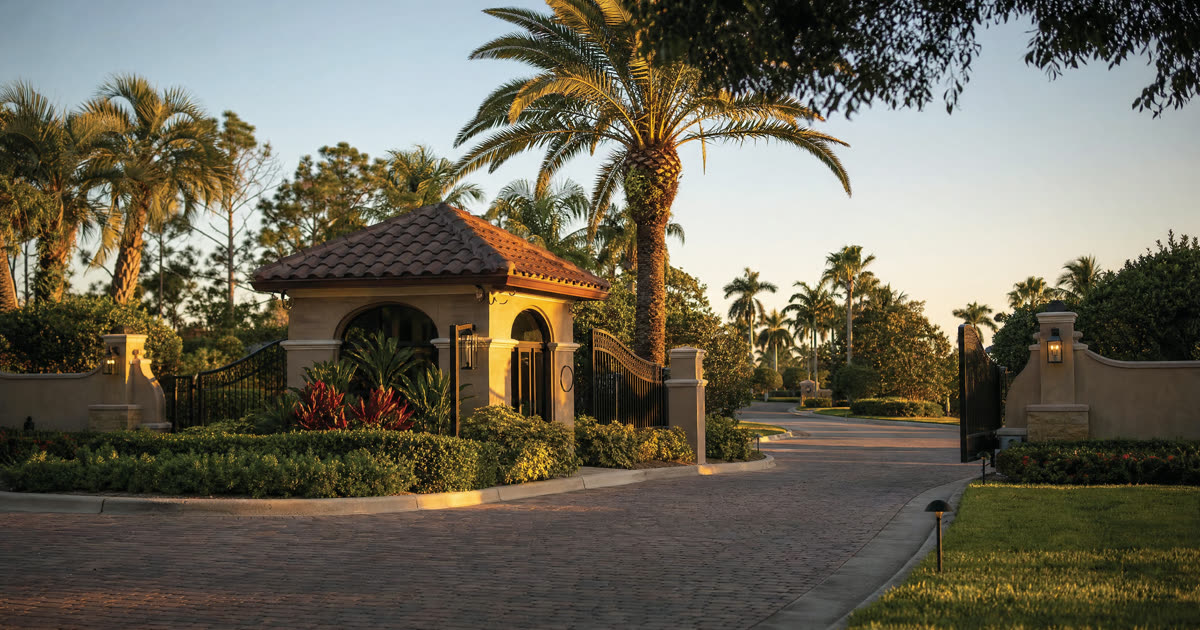
The community itself spans a master-planned footprint large enough to accommodate nearly 2,000 homes, making it the largest gated community in Palm Coast. About 1,567 homes have been built, with construction running from the early 1980s through 2024. The median year built lands around 2005, so buyers will find a mix of older village homes with mature landscaping and newer builds on larger lots. A 4,000-acre nature preserve borders the community, and residents routinely share their streets with osprey, eagles, herons, egrets, deer, and the occasional alligator near the water features.
The Villages Within the Gates
Grand Haven is not one uniform neighborhood. It is a collection of intimate villages, each with its own street character, lot configuration, and in many cases its own sub-association. Some villages front the Intracoastal Waterway directly, and those lots carry a premium that the market readily reflects. Others back to the Jack Nicklaus Signature Golf Course, a freshwater lake, or the surrounding preserve. Buyers who prioritize water views should understand that Intracoastal-fronting lots are genuinely scarce relative to demand, and the difference in setting compared to a golf-view or preserve-view lot is noticeable from the first walk-through.
The northern villages, including Wild Oaks, are served by the Creekside Athletic Center. That facility offers an indoor lounge and game room, a fitness center, separate adult and children's pools, a croquet court, a junior soccer field, volleyball and basketball courts, a fishing pier, and outdoor grills. Southern villages share the main Grand Haven Club amenities, which include two resort-style pools, two fitness centers, tennis courts, pickleball courts, and two on-site restaurants. Miles of walking and biking trails connect the villages to each other and to the Intracoastal edge.
Understanding the HOA Layers
Steve asked early in his research why the monthly costs at Grand Haven seemed higher than at some other Palm Coast communities. The answer is that Grand Haven operates under at least two layers of association governance, and buyers need to account for both.
The master association covers community-wide amenities, gated entry, landscaping of common areas, and the trail system. Most village sub-associations layer additional fees on top of that master fee to maintain village-specific grounds, entry features, or the Creekside Athletic Center in the north. Before writing any offer, a buyer should request the complete association documents for both the master association and the applicable village association. Under Florida Statutes Section 720.401, a buyer in a homeowners association community has the right to receive the association's declaration, articles of incorporation, bylaws, and rules before the contract becomes binding. A three-day rescission right applies once those documents are delivered. Arthur reviews those documents carefully for every buyer client, because assessment authority, reserve funding levels, and pending special assessments are disclosed there, not on the MLS.
The Community Development District: What It Is and Why It Shows Up on Your Tax Bill
Grand Haven is also subject to a Community Development District, or CDD. A CDD is a special-purpose local government created under Florida Statutes Chapter 190 to finance and manage infrastructure in planned communities. In plain terms, the developer uses the CDD to bond-finance roads, utilities, drainage, and recreational infrastructure, and then property owners repay that debt through an annual assessment that appears as a separate line item on the Flagler County property tax bill.
The CDD assessment is not the same as the HOA fee. It is a government assessment collected like a tax, and it does not disappear if the HOA votes to reduce dues. Buyers sometimes see the Flagler County tax bill and assume the CDD line is a one-time charge or a developer fee. It is neither. The debt portion of the CDD assessment runs on a fixed schedule until the bonds are retired; the operations and maintenance portion continues indefinitely. Arthur pulls the CDD assessment history and the bond payoff schedule as a standard part of his buyer review, because the annual CDD cost materially affects the true carrying cost of ownership at Grand Haven.
Want answers for your exact situation? Get 30 minutes with an Attorney & REALTOR®. It's free.
Book a Free Strategy Call or call/text 386-273-3636Golf Membership: Private Club, Outside Operator
The golf course at Grand Haven is a Jack Nicklaus Signature design, and it is one of the community's most visible selling points. The Club at Grand Haven is operated by Escalante Golf, a Fort Worth-based company that has assembled a portfolio of Florida courses. Escalante acquired the club as its sixth Florida property and fourteenth overall holding.
Residence in Grand Haven does not automatically include golf membership. Membership tiers exist, ranging from social access to full golf privileges, and the annual cost varies by tier and is set by the private club operator rather than the HOA. Steve, an active golfer, found the course beautiful and the membership options flexible enough to fit different levels of play. Karen, less interested in golf, appreciated that social membership allowed access to the restaurants and pool events without committing to a full golf fee. Buyers should contact The Club at Grand Haven directly for current membership pricing, because those fees are subject to change independently of HOA and CDD costs.
Flood Zones, Elevation, and the Insurance Conversation
An Intracoastal community carries flood zone complexity. Individual parcels within Grand Haven sit in different FEMA flood zones, ranging from lower-risk X zones to higher-risk AE zones depending on elevation and proximity to the waterway. Flood insurance is entirely separate from homeowners insurance and is driven by FEMA's National Flood Insurance Program maps combined with the property's elevation certificate. A home one street back from the Intracoastal can be in a materially different zone than a waterfront lot, and the insurance cost difference can be substantial.
Arthur orders the elevation certificate and reviews the FEMA flood map panel for every home he helps a buyer purchase near water. Buyers should also know that Florida property insurance is underwritten separately from federal flood coverage, and both markets have shifted meaningfully in Flagler County over the past several years. Getting insurance quotes before going under contract, rather than after, is a practice Arthur recommends without exception.
Home Values and Market Context
The Zillow Home Value Index for Palm Coast showed a typical home value of $345,000 in July 2026, reflecting a decline of 1.8 percent over the prior year against a five-year gain of 11.7 percent. Flagler County as a whole showed a typical value of $352,000 for the same period. Homes inside Grand Haven, particularly those on golf or Intracoastal-fronting lots, trade above the Palm Coast median because of the gated setting, the amenity package, and the scarcity of Intracoastal-view inventory. The one-year softening in the broader Palm Coast market has created more negotiating room than existed in 2022 and 2023, which Steve noted when reviewing active listings against recent sales.
Flagler County property taxes are assessed by the Flagler County Property Appraiser. Buyers who will occupy the home as a primary residence should apply for the homestead exemption, which reduces the assessed value by up to $50,000 and triggers the Save Our Homes cap under Article VII, Section 4 of the Florida Constitution, limiting annual assessment increases to three percent or the change in CPI, whichever is lower. Buyers moving from out of state, as Steve and Karen are, should understand that the cap does not apply to their first year of ownership; it engages after the first January 1 following the year they establish homestead.
What Steve and Karen Chose
After two visits to Grand Haven and one to Hammock Dunes, Steve and Karen chose Grand Haven. The deciding factors were specific. Steve wanted daily access to a well-maintained Nicklaus course without a long drive to the clubhouse. Karen wanted a social infrastructure, meaning restaurants, pickleball courts, and organized events, within the gates. Both wanted a full-time-resident community rather than one weighted toward seasonal or investment ownership, and the 79-percent homestead rate at Grand Haven gave them confidence that their neighbors would be there year-round.
They also appreciated that the governance structure, while layered, was transparent once they understood it. Arthur walked them through the master association documents, the village sub-association rules for their specific neighborhood, and the CDD assessment schedule before they made an offer. The flood zone designation for the lot they chose required a conversation with two insurance agents before they were comfortable with the carrying cost. That preparation, done before contract rather than during the inspection period, meant there were no surprises at closing.
Palm Coast's Intracoastal corridor is not a simple zip code. It is a collection of governed communities with their own rules, costs, and cultures. Grand Haven is the largest and most amenity-rich of them, and for buyers who want resort-caliber living without leaving the neighborhood, it is worth the careful diligence required to understand it fully.
Work With an Attorney-REALTOR® Who Knows Flagler County
Arthur Simpson, Esq., CIPS is an Attorney and REALTOR® with Realty Pros Assured in Ormond Beach. He is a sales associate serving buyers and sellers across Volusia and Flagler counties, including Palm Coast, Flagler Beach, Ormond Beach, Port Orange, New Smyrna Beach, and DeLand. His legal background means he reads HOA documents, CDD disclosures, flood certifications, and title commitments as part of every transaction, not as an optional add-on.
If you are considering Grand Haven or any other Palm Coast community, visit arthursimpson.com to explore community guides, schedule a consultation, or reach Arthur directly. The due diligence that protects a buyer starts long before the closing table.