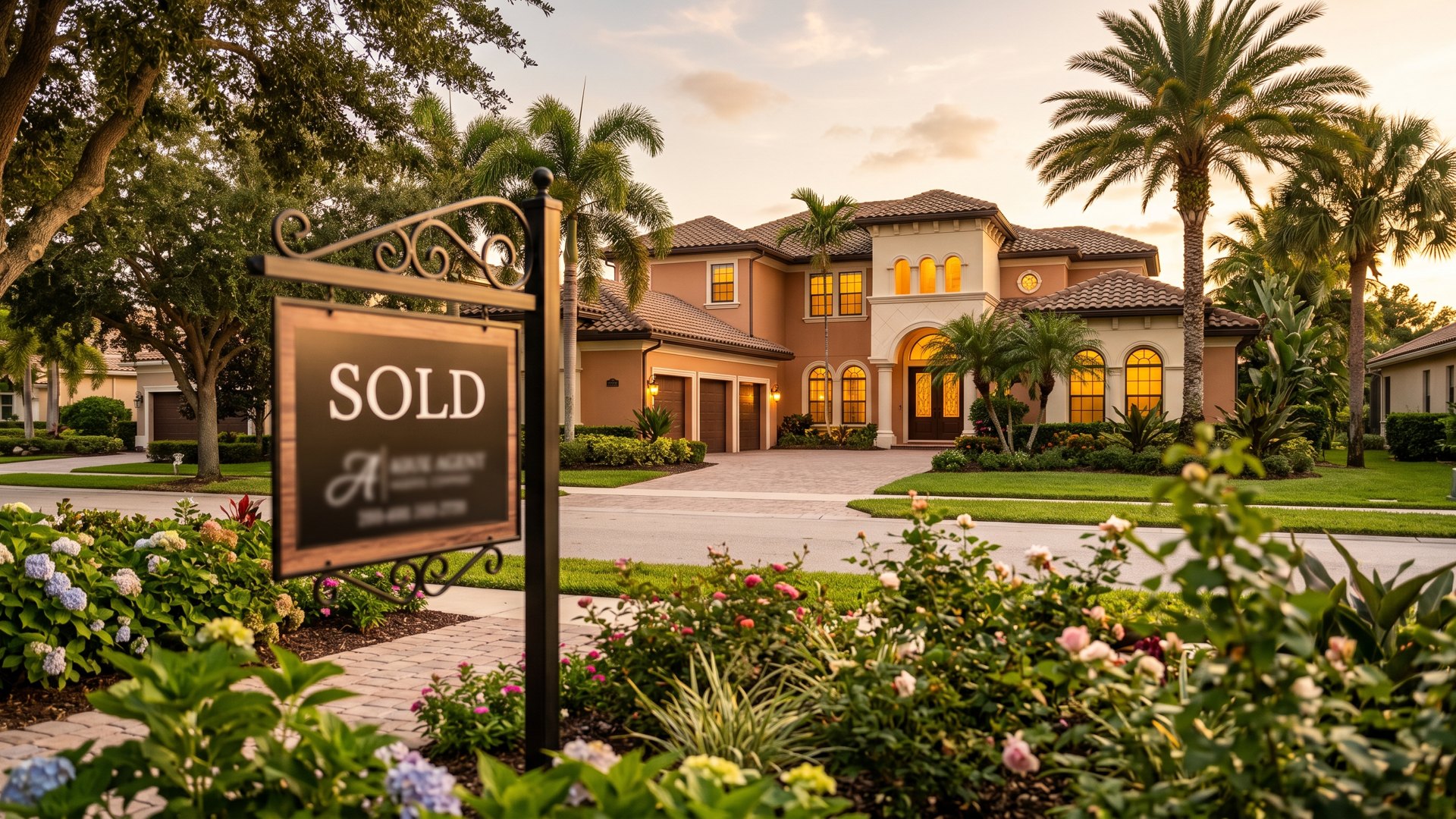
What Daytona Beach Home Sellers Need to Know Before They List
If you are thinking about selling your Daytona Beach home in 2026, the market will reward preparation and punish overpricing. Inventory is rising, buyers are negotiating harder, and the homes that sell quickly are the ones priced with precision from day one. Whether you own a beach-side bungalow near the coast, a mid-century block home west of I-95, or a condo in the South Atlantic corridor, the fundamentals below apply to you. Here is what the data says and what Florida law requires before you close.
Where Daytona Beach Home Prices Actually Stand in 2026
Market data for Daytona Beach currently spans a meaningful range depending on the source, the time period measured, and whether condominiums are included. Redfin places the median sale price at roughly $313,500 (three months ending October 2026), while twelve-month trailing data from local MLS records puts the figure closer to $282,000. In September 2026 alone, 77 homes closed at a median of $335,000. A defensible working range for a traditional single-family home in the city is $280,000 to $315,000, and that figure sits approximately 9 to 24 percent below national medians depending on the benchmark used.
Zoom out to Volusia County and the picture is modestly stronger. The county median reached $360,000 in Q2 2026, the highest quarterly figure on record, and August 2026 data shows a 2.6 percent year-over-year increase to $340,000. The most active price bracket countywide in July 2026 was $300,000 to $350,000, which accounted for 114 closed sales in a single month. If your home falls in that range, you are listing squarely in the sweet spot of buyer demand.
Is This a Buyer's Market or a Seller's Market?
It is a buyer's market, and sellers should plan accordingly. Current data shows approximately 0.21 buyers per active listing in Daytona Beach, 23 percent of sellers have already cut their asking price, and the typical time to sell is around 87 days. The sale-to-original-list-price ratio for Volusia County in August 2026 was 95.6 percent, meaning the average seller accepted about 4.4 percent less than their original ask. Only 7 percent of Daytona Beach homes sold above list price, down from just over 10 percent the year before.
None of that means you cannot sell well. It means you must price accurately, present the home well, and be ready to negotiate. Sellers who insist on 2022 prices are the ones sitting on the market for 120-plus days and accepting deeper discounts in the end.
Want answers for your exact situation? Get 30 minutes with an Attorney & REALTOR®. It's free.
Book a Free Strategy Call or call/text 386-273-3636What It Actually Costs to Sell a Home in Florida
Florida sellers carry a predictable but meaningful set of closing costs. Here is a realistic breakdown:
- Documentary stamp tax on the deed: Florida imposes $0.70 per $100 of the sale price under Section 201.02, Florida Statutes. On a $300,000 sale that is $2,100. In Miami-Dade County the rate is higher, but Volusia County sellers pay the standard rate.
- Real estate commission: Negotiable by law and by practice. The industry has shifted since 2024; discuss the structure with your REALTOR® before signing a listing agreement.
- Title insurance (seller's policy): Florida sellers customarily pay for the owner's title insurance policy in most counties, including Volusia. Premiums are set by Florida statute and filed with the Department of Financial Services; on a $300,000 sale, expect roughly $1,700 to $1,900.
- Outstanding liens and HOA estoppel fees: If your property is in a homeowners association, the buyer is entitled to an estoppel certificate under Section 720.30851, Florida Statutes. The HOA may charge up to $299 for the certificate (or $149 if no delinquency exists), and that cost is often negotiated between the parties.
- Prorated property taxes: Florida property taxes are paid in arrears. Sellers credit the buyer for the portion of the tax year they owned the home.
- Pre-listing repairs and staging: Variable, but sellers who invest modestly here tend to recover more than they spend.
All-in, most Daytona Beach sellers should budget between 6 and 9 percent of the gross sale price to cover the above costs before netting their proceeds.
Florida Disclosure Obligations: What You Must Reveal
Florida law does not use a mandatory state-issued disclosure form for residential sales, but it does impose a strict duty to disclose. Under the standard established in Johnson v. Davis, 480 So. 2d 625 (Fla. 1985), and codified in practice through Section 689.261, Florida Statutes, a seller must disclose all known facts that materially affect the value of the property and are not readily observable by the buyer. That includes roof condition, water intrusion history, foundation issues, prior mold remediation, unpermitted additions, and anything else a reasonable buyer would want to know.
Withholding a known material defect is not a gray area. It can expose you to rescission of the contract, damages, and attorney's fees long after closing. Disclosure is not a weakness in negotiation; it is a legal obligation and a practical protection for the seller.
Pricing Strategy: How to Get It Right the First Time
Overpriced homes in a buyer's market do not just sit longer; they often sell for less than they would have if priced correctly from the start. Buyers and their agents notice days-on-market and interpret price reductions as a signal that something is wrong. The goal is to list at a price that attracts showings within the first two weeks.
A strong pricing analysis looks at comparable closed sales within the past 90 days, active competition the buyer will also be touring, and pending sales as a leading indicator of where the market is heading. Location within Daytona Beach matters enormously: homes near the beachside, in Daytona Beach Shores, or in stable neighborhoods along Riverside Drive carry different dynamics than those near high-traffic corridors or in areas with higher distressed-sale concentrations. If you are comparing your pricing process to what sellers are doing in Port Orange, Ormond Beach, New Smyrna Beach, or Palm Coast, be cautious: those sub-markets have distinct inventory levels and buyer profiles.
If you are evaluating all your options before listing, it is also worth understanding how cash home buyers in Volusia County work, how to vet their offers, and how a cash offer compares to listing on the open market. Sometimes cash makes sense. Often it does not. You need real numbers to decide.
Ready to Sell? Let's Talk Strategy First
Selling a home in Daytona Beach in 2026 is entirely achievable, but it requires a clear-eyed view of the market, a legally sound disclosure process, and a pricing strategy built on current data rather than hope. As an attorney and REALTOR® serving Volusia and Flagler County sellers, I bring both the legal foundation and the market knowledge to help you navigate the transaction from listing agreement to closing table.
Visit arthursimpson.com or call to schedule a no-obligation seller consultation. There is no substitute for reviewing your specific property, your timeline, and your goals before committing to a strategy.