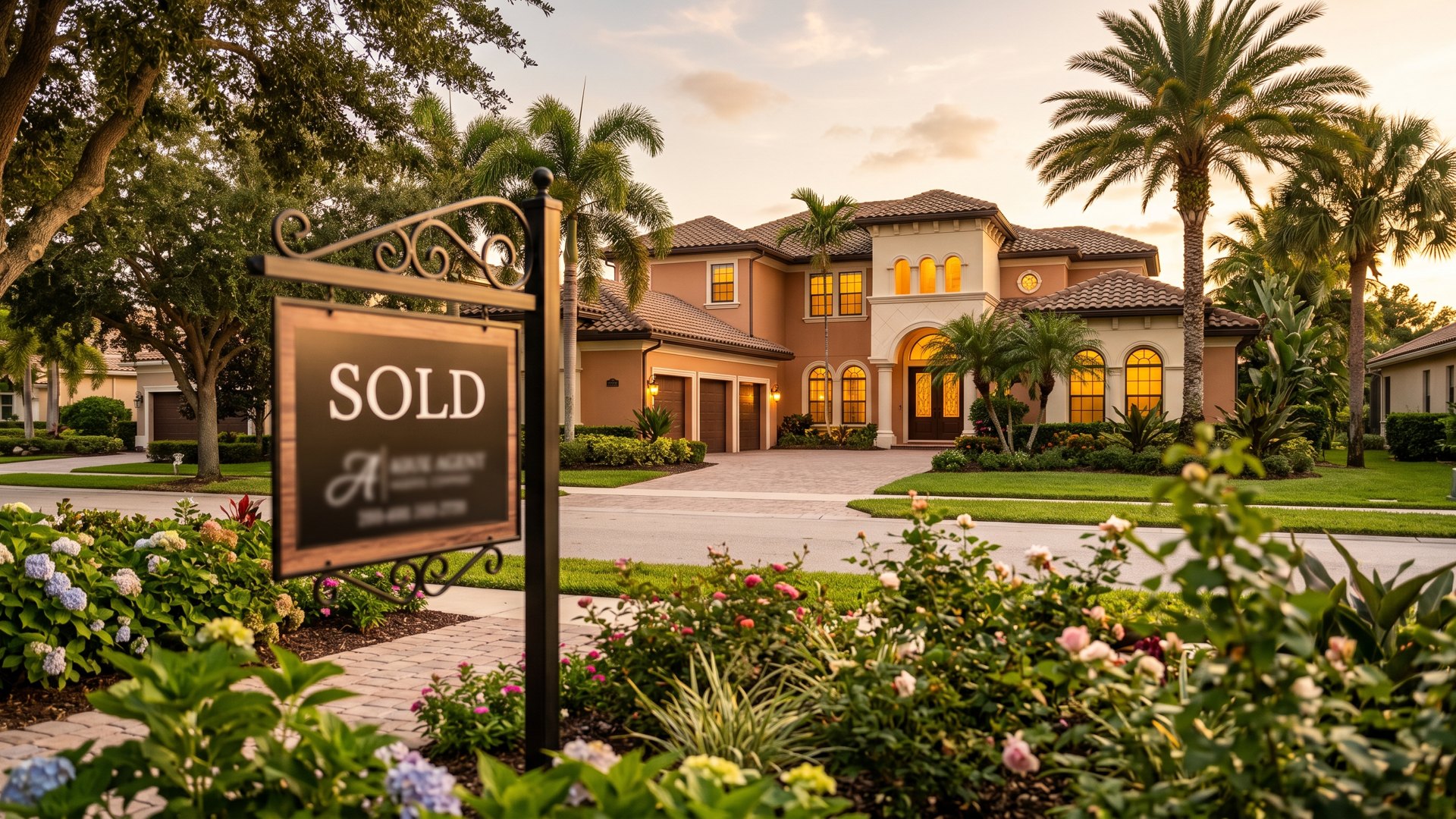
Ormond Beach Is a Seller's Puzzle With Two Very Different Pieces
If you are preparing to sell a home in Ormond Beach in 2026, the first question you need to answer is not "what is my home worth?" It is "which market am I actually in?" Ormond Beach splits cleanly into two ZIP codes with two distinct buyer pools, two pricing profiles, and two sets of timing realities. Getting that distinction right before you price your home could be the difference between a smooth closing and a listing that sits and stalls.
As an Attorney & REALTOR® serving Volusia County, I work with sellers across the beachside corridor, the mainland communities west of I-95, and the golf course estates of Halifax Plantation. Here is what the 2026 data says, and what it means for your strategy.
Beachside (ZIP 32176) vs. Mainland (ZIP 32174): The Numbers Sellers Must Know
Over the twelve months ending August 2026, the overall Ormond Beach median sale price landed at approximately $405,000, or $218 per square foot, across roughly 1,520 recorded transactions. That figure sits about 16 percent above the broader Volusia County median of $350,000, which tells you that Ormond Beach commands a genuine premium over neighbors like DeLand, Port Orange, and parts of Daytona Beach.
But the median conceals an important split:
- ZIP 32176 (beachside): Median sale price of approximately $400,000 across 455 sales. Single-family homes were listed at a median of $564,000 as of spring 2026, up sharply from $452,250 the prior year. Oceanfront homes range from $400,000 to $700,000 and above. Condominiums start around $250,000 and trade between $372,500 median list price, with price-per-square-foot running $220 to $280 or more for oceanfront units.
- ZIP 32174 (mainland/west): Median sale price of approximately $396,000 across 1,065 sales, the high-volume side of the market. Golf course communities such as Halifax Plantation and LPGA International-adjacent neighborhoods push upper-end prices from $800,000 to $2,000,000. Tomoka River waterfront homes average $200 to $250 per square foot.
The gap at the median level looks narrow, but the buyer motivations, financing types, and negotiating behavior are quite different on each side of the bridge.
Who Is Buying, and What Do They Want?
Beachside buyers in 32176 tend to be lifestyle-driven. Many are second-home purchasers from the Northeast or Midwest, retirees seeking walkable beach access, or investors targeting short-term rental income under Ormond Beach's vacation rental regulations. They are often paying cash or carrying large down payments, and they respond strongly to ocean views, updated kitchens, and move-in-ready condition. For sellers evaluating cash offers in this segment, the vetting framework outlined in this article on cash home buyers in Volusia County is a useful starting point.
Mainland buyers in 32174 are often primary-residence purchasers relocating from higher-cost Florida markets like Orlando or Southeast Florida, as well as local move-up buyers and families seeking larger lots and newer construction. They are more sensitive to interest rates, more likely to be using conventional or FHA financing, and more focused on school zones, commute times to Daytona Beach or Palm Coast, and community amenities.
Want answers for your exact situation? Get 30 minutes with an Attorney & REALTOR®. It's free.
Book a Free Strategy Call or call/text 386-273-3636Timing: What 2026 Days-on-Market Data Tells Sellers
This is where sellers need to pay close attention. The Ormond Beach market has cooled from its post-pandemic velocity. As of mid-2026, homes were averaging 88 to 93 days on market, compared to 65 to 85 days in 2025. That is a meaningful shift. Buyers have more inventory to choose from and more room to negotiate than they did even one year ago.
Practically, this means three things for sellers:
- Price it right at launch. Homes that enter the market overpriced are accumulating DOM quickly, and buyers in a slower market treat elevated days on market as a signal to negotiate harder. A price reduction after 60 or 90 days rarely recovers the momentum of a well-priced launch.
- Spring remains the strongest window. Florida's seasonal buyer traffic peaks from January through April, when snowbirds and northern buyers are actively touring. Listing a beachside property in late January or February positions you to capture that audience at peak demand.
- Mainland sellers have more flexibility. Primary-residence buyers shop year-round, so a fall or early winter listing in 32174 can still perform well if priced correctly and prepared for market.
For a detailed look at how these timing dynamics compare across the broader region, see this analysis of selling a house in Daytona Beach in 2026, which covers adjacent market conditions that often influence Ormond Beach pricing.
Florida Disclosure Obligations Sellers Cannot Ignore
Florida law imposes a clear duty on sellers to disclose known material defects that are not readily observable and that would affect a buyer's decision to purchase. Under the standard established in Johnson v. Davis and codified through Florida Statute Section 689.261 (the energy efficiency disclosure) and related case law, failing to disclose a known defect can expose a seller to rescission of the contract, damages, or both.
Ormond Beach sellers specifically should be prepared to address:
- Flood zone status under FEMA designations, particularly for beachside and Tomoka River corridor properties, with reference to the flood disclosure requirements under Florida Statute Section 161.57 for coastal properties.
- HOA and CDD fee disclosures, which are governed by Florida Statute Section 720.401 for homeowner associations and Section 190.048 for community development districts. Halifax Plantation and other planned communities carry CDDs that buyers must be clearly informed about.
- Wind mitigation and insurance history, which have become material considerations as Florida's property insurance market has remained volatile through 2026.
Pricing Strategy for 2026: The Bottom Line
The Ormond Beach market in late 2026 rewards precision. With median prices holding in the $396,000 to $405,000 range and list prices running slightly above that, sellers who price within or just below the upper bound of their comparable sales range are moving inventory. Those who test the ceiling are sitting. In a market averaging nearly 90 days to close, the carrying costs of an overpriced listing, including mortgage payments, taxes, insurance, and maintenance, add up fast.
A comparative market analysis that segments beachside from mainland, accounts for community-specific factors like Halifax Plantation estate pricing or A1A corridor condo inventory, and applies current price-per-square-foot benchmarks will produce a defensible number. That is the starting point for every listing conversation I have with Ormond Beach sellers.
Ready to List? Let's Build Your Strategy.
Whether your property is steps from the Atlantic or tucked into a golf course community west of the interstate, selling in Ormond Beach in 2026 requires a plan that is specific to your ZIP code, your buyer pool, and your timeline. As an Attorney & REALTOR® with Realty Pros Assured, I bring both the legal background to navigate disclosure obligations and the market knowledge to price and position your home competitively.
Visit arthursimpson.com to schedule a consultation or request a complimentary comparative market analysis for your Ormond Beach property.