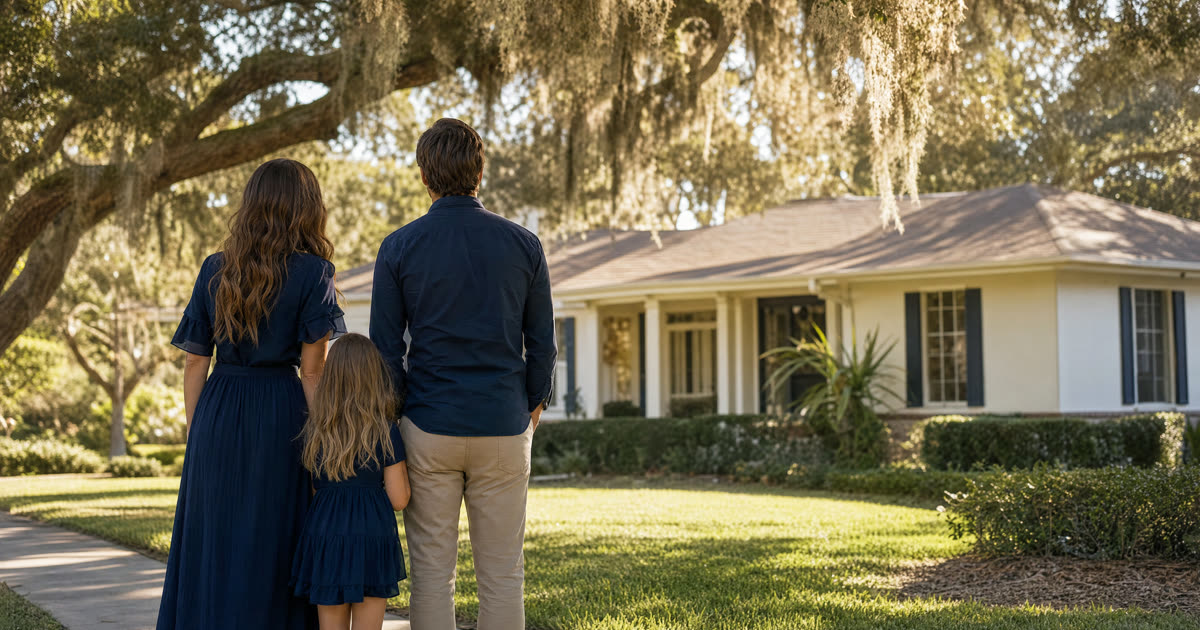
Two Counties, One Coastline, One Big Decision
Carol and Jim had done their homework. At 67 and 68, they were ready to leave Pennsylvania winters behind, and the stretch of Florida coast north of Orlando kept rising to the top of their list. They had a solid budget, no school-age children, and no existing ties to pull them toward one community over another. Their question was simple and genuinely hard to answer: Volusia County or Flagler County? This article follows their process. Carol and Jim are a composite example created for illustration, not actual clients, but the questions they asked are real ones that retiring buyers ask every week.
The Medical Picture: A Meaningful Difference in Coverage
For Carol and Jim, healthcare access ranked just below purchase price on their list of priorities. This is where Volusia County holds a clear structural advantage.
Volusia is served by two large, competing hospital systems. Halifax Health Medical Center in Daytona Beach is the county's flagship public hospital, a Level II Trauma Center with a full range of specialty services. AdventHealth Daytona Beach sits nearby and is part of a national faith-based system with broad specialty coverage. Port Orange and Ormond Beach each have additional AdventHealth campuses, and DeLand hosts Halifax Health Medical Center of Deltona on the county's western edge. The density of facilities means that almost any Volusia address sits within a short drive of at least one full-service hospital.
Flagler County has grown rapidly, and its medical infrastructure is catching up. AdventHealth Palm Coast opened a full-service hospital there and has expanded its footprint, but the county still has fewer specialist options and a smaller network of urgent care and outpatient facilities than Volusia. A Flagler resident needing a subspecialty procedure may travel to either Jacksonville or Daytona Beach. That is not unusual for smaller counties, and it is manageable, but it is a real consideration for anyone managing a chronic condition or anticipating significant care needs in the years ahead.
Carol, who has a cardiologist she wanted to replace with a local provider, noted that Volusia's cardiology network was substantially larger. Jim was less focused on that point, but both agreed that more options felt like fewer worries.
Property Taxes in Plain Language
Florida does not tax retirement income, Social Security, or pension distributions at the state level, and that is often the headline. The property tax picture is county-specific and worth understanding before you fall in love with a house.
In both Volusia and Flagler, property taxes are assessed by the county property appraiser based on just value. Once a buyer establishes a permanent Florida residence and claims the homestead exemption under Florida Statutes Section 196.031, the first $25,000 of assessed value is exempt from all taxes, and an additional $25,000 is exempt from non-school taxes. More importantly, the Save Our Homes cap under Section 193.155 limits annual increases in assessed value to three percent or the change in the Consumer Price Index, whichever is lower. For a retiree on a fixed income, that cap is genuinely valuable: it means the assessed value of a homesteaded property cannot spike with the market year after year.
Volusia County's overall millage rate has historically run somewhat higher than Flagler's, reflecting a larger county government, more infrastructure, and a broader service base. Flagler's rates have risen as the county has grown and added services. The gap has narrowed. Neither county is dramatically cheaper than the other, and the specific municipality matters: incorporated cities layer their own millage on top of the county rate, while unincorporated areas pay only county and special district millages. Palm Coast, which is Flagler's dominant city, covers a large portion of the county and carries its own city millage. Carol and Jim were advised to request the current tax bill for any property they considered rather than estimating from county averages.
Home Values: What the Numbers Say
The verified figures here come from the Zillow Home Value Index for July 2026 and reflect typical values, meaning the middle of the distribution, not the top or bottom.
- Volusia County overall: $327,000, down modestly over the prior year but up substantially over five years.
- Ormond Beach: $367,000, down 2.2% over one year and up 15.9% over five years.
- Port Orange: $340,000, down 3.1% over one year and up 13.8% over five years.
- Flagler County overall: $352,000, which is higher than the Volusia countywide figure.
- Palm Coast: $345,000, down 1.8% over one year and up 11.7% over five years.
- Flagler Beach: $455,000, down just 0.8% over one year and up 12.0% over five years.
The pattern is instructive. Volusia's individual communities have appreciated more steeply over five years, particularly Ormond Beach. Flagler's countywide median sits above Volusia's, driven partly by Palm Coast's planned community premiums and Flagler Beach's coastal scarcity. The short-term softening across both counties reflects broader Florida market normalization rather than any structural weakness. For buyers, this is a better entry environment than 2022 or 2023.
Want answers for your exact situation? Get 30 minutes with an Attorney & REALTOR®. It's free.
Book a Free Strategy Call or call/text 386-273-363655-Plus Communities, Golf, and the Day-to-Day Feel
Both counties support active adult living, but in different ways.
Volusia has a longer-established retirement community landscape. Ormond Beach and Port Orange both have multiple 55-plus neighborhoods, some attached to golf courses and some standalone. The county's variety of downtowns, from the art-gallery energy of New Smyrna Beach to the historic Main Street feel of Ormond Beach, gives retirees genuine options for how they want to spend a Tuesday afternoon. Daytona Beach's broader entertainment infrastructure, including the speedway, the boardwalk, and a reviving downtown, adds to the activity menu. DeLand, inland in western Volusia, has a charming downtown and a quieter, less coastal pace that appeals to some buyers.
Flagler County's story is largely Palm Coast's story. Palm Coast was a planned community developed starting in the 1970s and today has a substantial population, extensive canal and golf-course sections, and a grid of well-maintained roads. It is orderly, affordable relative to beachside alternatives, and has grown its own restaurant and retail scene. Flagler Beach, a small barrier-island town, offers a low-key coastal lifestyle that attracts buyers who want ocean proximity without the density of Daytona Beach. The county is newer and smaller, which some retirees find appealing and others find limiting.
Jim, who golfs, found that both counties had courses worth playing. Carol, who wanted walkable access to restaurants and a farmers market, found more immediate options in Ormond Beach and Port Orange than in the Palm Coast interior.
Airports and Getting Around
Daytona Beach International Airport serves Volusia County with direct service to a growing number of destinations. It is smaller and easier to navigate than Orlando International, and for retirees who plan to fly back to Pennsylvania regularly, that convenience matters. Flagler County residents typically drive to Daytona Beach International, Jacksonville International, or Orlando International depending on their destination. All three are reachable, but none are as close as Daytona Beach is to most Volusia addresses. Carol and Jim planned to visit family several times a year, and the airport question was not trivial.
Insurance, Flood Zones, and the Coastal Exposure Question
Florida homeowners insurance has become a significant budget line, and coastal proximity drives much of the variation. Both counties have barrier-island and oceanfront properties that carry higher exposure, and both have inland areas where wind and flood risk is meaningfully lower.
Flood insurance is separate from homeowners insurance and is governed by FEMA flood zone designations and the property's elevation certificate. A home in an AE or VE flood zone will require flood insurance if there is a mortgage, and the premium reflects actual elevation relative to base flood elevation, not just county location. Buyers in both Volusia and Flagler should ask for the elevation certificate before making an offer and should obtain flood insurance quotes early in the due diligence period.
Condominium buyers in either county face additional considerations. Under Florida Statutes Section 553.899 and the related structural integrity reserve rules enacted after 2022, condominium buildings of three stories or more are now subject to milestone inspection requirements and must fund reserves for structural components. This has affected condo association budgets and, in some cases, monthly fees. Reviewing the association's most recent milestone inspection report, reserve study, and financial statements before going to contract is not optional; it is essential.
What Carol and Jim Chose
After several visits and a great deal of conversation, Carol and Jim chose Ormond Beach in Volusia County. The cardiology network was the deciding factor for Carol. The proximity to Daytona Beach International simplified their travel plans. The five-year appreciation in Ormond Beach, 15.9% according to the Zillow Home Value Index, suggested a community with sustained demand. And the walkable downtown, the Atlantic Avenue corridor, and the easy access to both the beach and the mainland gave them the variety they wanted in retirement.
They did not dismiss Flagler. Palm Coast's value and its canal-section lifestyle appealed to Jim, and Flagler Beach's quiet charm was genuinely attractive. If their healthcare priorities had been different, or if they had wanted a more contained, planned community feel, the answer might have been different.
The right county depends on the right priorities. These two counties are close in price, close in tax structure, and close in coastal access. The differences that matter, medical density, airport proximity, community character, and coastal exposure, are real but navigable with the right guidance.
Work With an Attorney-REALTOR® Who Knows Both Counties
Buying retirement real estate in Florida involves more than finding a house you like. It involves understanding homestead exemption timing under Florida law, reviewing HOA and condominium documents and estoppel certificates before you are committed, confirming flood zone designations and obtaining insurance quotes, and understanding exactly what you are signing in a Florida Realtors contract. Arthur Simpson, Esq., CIPS, is an Attorney and REALTOR® with Realty Pros Assured in Ormond Beach. He brings legal training and local market knowledge to every buyer relationship, and he works across both Volusia and Flagler counties. If you are making this decision, start the conversation at arthursimpson.com.